
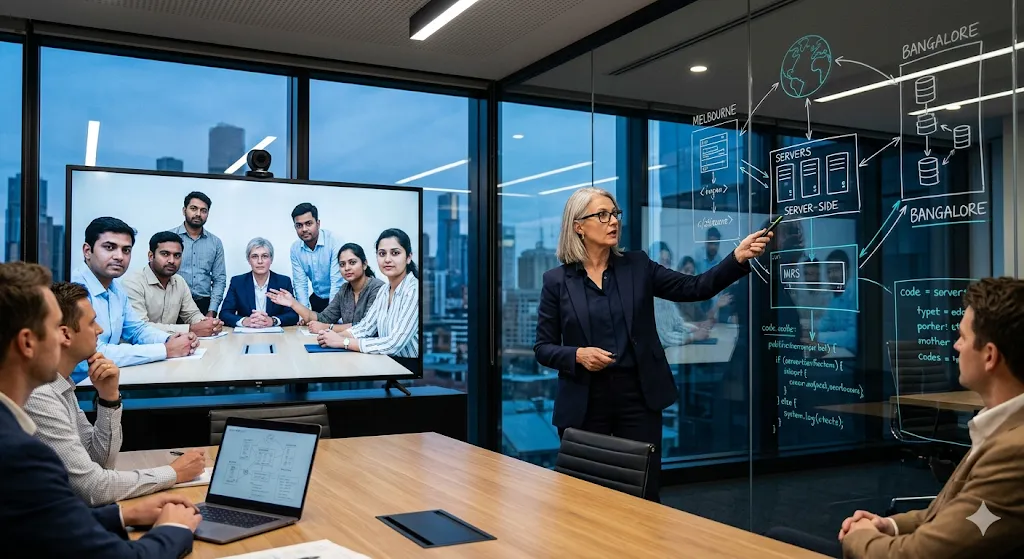
Forward Deployed Engineering puts our engineers inside your operation. They attend standups, sit with the people doing the work, and build from observation rather than from a requirements document written six months ago.
When this is the right model
The process is complex, undocumented, or changes weekly
Previous builds failed because requirements were wrong by the time the system shipped
The people who know the work don't write specs, they show you
You need something working in weeks, not months
The domain expertise lives in operations, not in IT
When it isn’t
The scope is well defined and a normal project plan will work
You need a large team; FDE works best with one to three engineers
Your team can't make time to work alongside ours daily
You want a fixed price for a fixed deliverable; this model is inherently adaptive
How a deployment unfolds
Observe
Our engineers sit with your operations team. They watch the actual work, map the exceptions, understand the language, and identify where time and accuracy are lost. No building yet.
Smallest useful thing
Build and ship the smallest tool or automation that addresses a real pain point observed in week one. Something people use on Wednesday, not something demonstrated in a steering committee.
Build, watch, adjust
Iterate in tight cycles. Build, put it in front of the people doing the work, watch what happens, adjust. Each cycle produces something that either ships or teaches us what to build next.
What you provide
Access to the people doing the work, not just managers, the actual operators
A desk, a badge, and permission to ask obvious questions
A product owner or decision maker available daily
Infrastructure and tooling access for our engineers
Patience for the first week when nothing visible gets built
What you get
Working software that addresses real operational pain, not interpreted requirements
Engineers who understand your domain because they've sat in it
Weekly demonstrations of working systems, not slide decks
Full ownership of all code, configuration and documentation from day one
A clear recommendation at the end on what to do next
What happens at the end
Before the deployment ends, we agree on one of three options:
Hand over and leave
Your team takes ownership. We document everything, run a transition period, and step away. You call us if you need us.
Transition to Build Run Change
The system needs ongoing operation and evolution. We move it into our BRC model with named engineers, SLAs, and a funded change allocation.
Extend the deployment
There's more to build. We agree a new scope and continue with the same engineers who already know the domain.
Common questions
How is this different from a contractor?
A contractor fills a seat on your team and works to your specifications. Our forward deployed engineers bring their own methodology: observe first, build small, iterate fast. They're accountable for outcomes, not hours.
Can they work remotely?
The first two weeks must be on site. After that, a hybrid model works if the daily connection with operations is maintained. Fully remote defeats the purpose; if they can't see the exceptions, they'll build the wrong thing.
One engineer or a team?
Usually one or two. The model depends on deep context, which doesn't scale to large teams. If you need more than three, you probably need Build Run Change instead.
What if the fit is wrong?
We'll know within the first two weeks. If the engineer isn't right for the domain or the working relationship isn't productive, we replace them. No penalty, no awkward conversations; it's built into the model.
Put engineers where the work happens
Talk to us about deploying engineers inside your operation.
Book a working session